Quarterly tax estimates
How Kibble estimates your federal and state quarterly taxes, reminds you before each due date, and records what you paid.
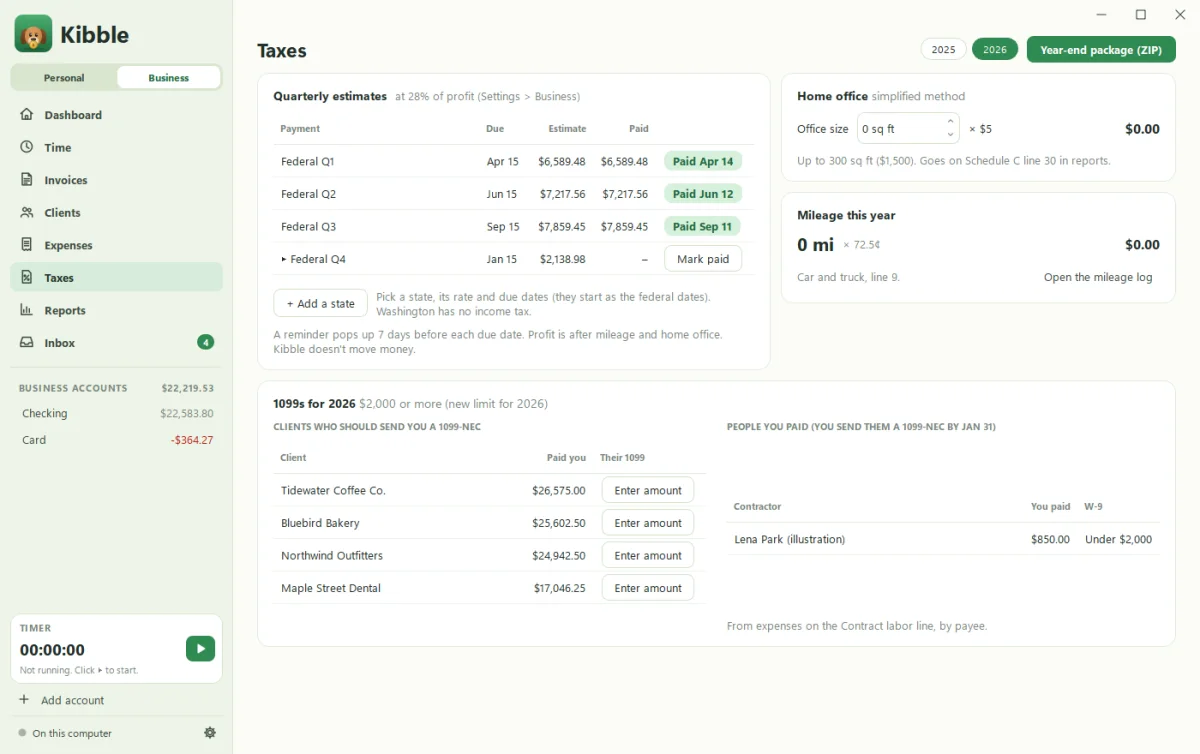
Kibble’s Taxes screen estimates what to set aside for quarterly estimated taxes, federal plus any states you add, based on your business profit and the tax estimate rate you choose. A reminder pops up 7 days before each due date. When you pay, mark the quarter paid and Kibble records it. Kibble doesn’t move money or file anything.
How is the estimate calculated?
Your profit (income minus expenses, after mileage and home office deductions) times your Tax estimate rate from Settings > Business. Pick a rate that covers both income tax and self-employment tax for your situation. If you’re unsure, ask your accountant for a number. It takes them two minutes and saves you a lot of guessing.
How do I add my state?
On Taxes, add a state with its rate and due dates. They start as the federal dates, so change them if your state’s differ. Washington has no income tax, and Kibble knows.
When are quarterly taxes due?
For federal estimated taxes, the usual dates are April 15, June 15, September 15 and January 15 of the next year. They move to the next business day when they land on a weekend or holiday. Kibble reminds you 7 days ahead.
How do I record a payment?
Click Mark paid for the quarter and enter what you paid for federal, and for any states due the same day. Kibble only records it. It says so right on the screen.
What else is on the Taxes screen?
- Home office using the simplified method (see Mileage and home office).
- 1099s both ways, plus the year-end ZIP for your accountant (see 1099s and the year-end ZIP).
New to quarterly taxes?
Read Quarterly taxes for freelancers, explained simply for the plain-words version of who pays, when, and how much to set aside.
Questions people ask
Does Kibble pay or file my taxes?
No. Kibble estimates and records. You pay through the IRS or your state, and file with your accountant or tax software.
Is the estimate exact?
No. It's your profit times the rate you set. It's a planning number, not tax advice. Check it with a tax professional.
Still scratching your head?
Send us a note and a real person will get back to you.